Cattle guard foundations, done the sensible way
A cattle guard is only as good as what it sits on. The good part: the right foundation isn't something you buy and ship — it's concrete you pour from your local ready-mix plant, using drawings we provide free with any guard order. Here's how the three common foundation types compare, and why we will never sell you a precast one.
What does the foundation actually do?
A cattle guard spans a shallow vault in the road. The foundation — two footings running under the guard's bearing rails, tied into end walls — carries wheel loads from the steel into the ground and holds the guard at road grade. Get the footings right and a 12-foot guard takes traffic quietly for the long haul. Get them wrong and the guard rocks, walks, and chews up its own edges.
Poured-in-place, precast, or railroad ties — which one?
Poured-in-place concrete, for almost everyone. Here's the honest comparison:
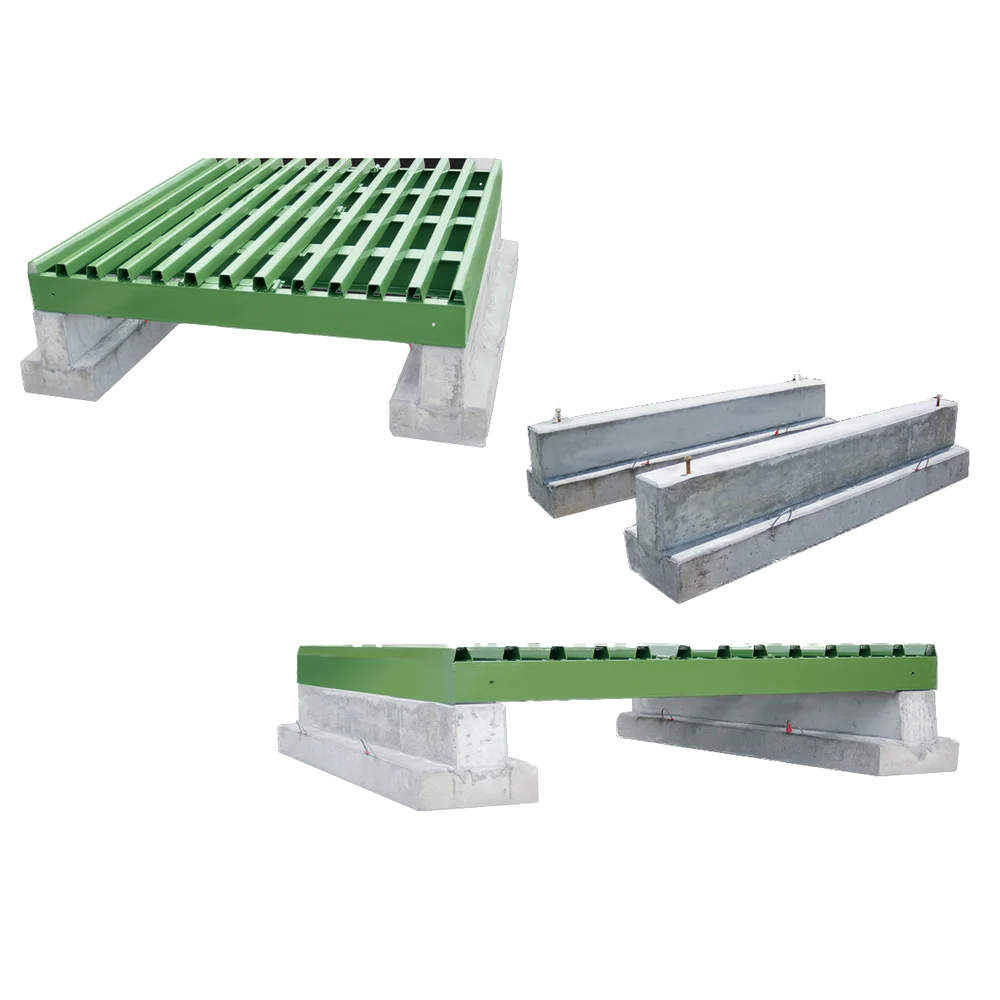
| Foundation | What it is | Where it makes sense | The catch |
|---|---|---|---|
| Poured-in-place concrete | Forms set to our drawings, filled by your local ready-mix truck | Nearly every driveway and ranch entrance; the county-road default | You wait out the cure time |
| Precast concrete | Factory-cast footings trucked to your site | Sites where a mixer truck genuinely can't reach | 2,000–3,500 lb of concrete that forces flatbed freight — shipping it can cost more than shipping the guard |
| Railroad-tie crib | Ties boxed into a crib under the guard rails | Temporary or low-traffic private crossings | Wood rots and settles, and there's no load rating anyone will stand behind |
Poured-in-place wins because concrete is heavy and local. Every town in cattle country has a ready-mix plant, and a mixer truck hauling to your gate beats paying long-haul freight on the same material every time. Precast is structurally fine — it's the same concrete — but it fails on arithmetic, which brings us to the next point.
Tie cribs are the old-school method and they're not nothing: cheap, fast, no cure time. But ties rot from the day they go in, the crib settles out of grade, and an unknown foundation under a rated guard means the rating is only as good as the wood. Fine for a temporary crossing. Wrong answer under anything a county will ever look at.
Why don't we sell precast foundations?
Freight. A guard itself weighs roughly 1,000 to 1,800 pounds and rides LTL freight for a typical $500–$1,300 delivered anywhere in the lower 48. Precast foundations run 2,000–3,500 pounds and can't ride the same way — they force a flatbed, and shipping them can cost more than shipping the guard they sit under. Paying long-distance trucking on concrete your own county produces by the yard makes no sense, so we don't offer it. We share the drawings free and you source the concrete locally. The full delivered-cost picture is in our cattle guard cost guide.
Shopping "concrete cattle guards for sale"? Read this first
That search usually means one of two products: a precast concrete base for a steel guard, or an all-concrete guard. Precast bases genuinely exist — dealers list a pair for an 8-foot guard at roughly $1,500 to $1,900 — but at 2,000–3,500 lb they force flatbed freight, and trucking concrete across the country can cost more than trucking the guard itself. The same money buys your local ready-mix plant's concrete poured to our free drawings (call them blueprints, plans, or forms layouts — same documents), with a rated steel guard on top. If someone quotes you a long-haul precast price, add the real freight before you compare.
How long does the concrete need to cure?
Longer than anyone wants. Concrete keeps gaining strength well after it looks hard, so give the pour real cure time before you set steel on it — and more time again before loaded trucks cross. Your ready-mix supplier will give you the cure schedule for the exact mix you order; follow it rather than any rule of thumb from the internet, including ours. Keep the pour damp in hot, windy weather and don't pour onto frozen ground. The cure is the one step you can't buy back later, and rushing it is how a good pour turns into a cracked one.
How does the guard anchor to the footings?
The drawings show anchor locations for your guard size. The clean way is to cast the anchors into the wet pour — set them off the drawing before the concrete goes stiff — rather than drilling after the fact. Weight helps hold a guard down (a 14-footer is about 1,800 pounds), but weight alone doesn't stop a guard from creeping under braking and turning loads, and a guard that walks off its bearing is how edges and welds get eaten. Anchor it once, correctly, and forget about it.
What about county roads and inspections?
For anything on a public road or under county review, get a local engineer to bless the foundation design and check your county's spec before digging. Our drawings are a working starting point, not a stamped substitute for local requirements. Most counties de-facto expect an HS20-rated guard — our load ratings guide explains what that means in plain numbers — and the excavation, drainage, and base-prep details live in our installation guide.
How do you get the drawings?
Order any guard from the cattle guards for sale page and ask for the foundation drawings — they're free, matched to the guard you bought, and ready to hand to your excavator. Questions first? Call (800) 555-0143. We deliver. We do not install.
Foundation questions
Do the foundation drawings cost anything?
No. Drawings come free with any guard order, sized to the exact guard you buy. Hand them to your excavator and your ready-mix plant and they'll know what to dig, form, and pour.
Can I set a cattle guard directly on dirt or gravel?
Not a vault-style guard. The rails need solid bearing to carry axle loads, and the vault underneath is part of what makes livestock refuse to cross. Bare dirt settles unevenly and the guard will rock and creep. Boxed set-in-place designs for surface use do exist — those are quote-by-phone, so call us at (800) 555-0143.
Will a railroad-tie crib pass a county inspection?
Ask your county before you count on it. Ties carry no load rating anyone will certify, and counties that inspect generally want engineered concrete under a rated guard. For a private low-traffic or temporary crossing, ties may be fine. For public-road work, plan on concrete and an engineer's sign-off.
Do you pour the foundation or install the guard?
No. We deliver. We do not install. You pour locally from our drawings, and you'll need a tractor, loader, or forklift on site the day the guard arrives — the carrier cannot unload it.
Buy the guard — the drawings ride along free
See guards & delivered pricesPrefer to talk it through first? Request a quote — a real person responds within 4 business hours.